

La Revista Electrónica Educare es editada por el Centro de Investigación y Docencia en Educación, de la Universidad Nacional, Costa Rica. Es una publicación internacional de carácter académico. Su formato y publicación es electrónico. Su periodicidad es cuatrimestral. El primer número comprende de enero a abril y se publica el 1ero de enero. El segundo número, de mayo a agosto, se publica el 1ero de mayo. El tercer número, va de setiembre a diciembre y se publica el 1ero de setiembre.
El objetivo de Educare es divulgar la producción en el área de la Educación, tanto nacional como internacionalmente, permitiendo a autores y autoras la comunicación de sus hallazgos y a las personas lectoras, la posibilidad de dimensionar el extenso quehacer en esta disciplina y su impacto y relación con otros campos de conocimiento. En busca de la construcción de pensamiento pedagógico interdisciplinario, la Revista procura la reflexión académica; la discusión y análisis del conocimiento publicado; la presentación de nuevas perspectivas; la incorporación de innovación y el relato de aplicaciones metodológicas exitosas. Conscientes de amplio rango de expresiones en este ámbito, desde las conceptualizaciones teóricas hasta los ejercicios prácticos, Educare ofrece una vitrina de intercambio, difusión y promoción de la Educación.
Su cobertura temática es la educación en todas sus disciplinas. El público meta de esta publicación está constituido por la comunidad nacional e internacional de investigadores, estudiantes, carreras de grado y de posgrados y todo público que se interese por las disciplinas del área de la educación.
Descriptores: Educación continua, educación de adultos, educción universitaria, educación especial, educación rural, educación preescolar, educación a distancia, educación artística, educación básica; educación ciudadana, educación cívica, educación sexual, tecnologías de la información y la comunicación, informática educativa, orientación, educación no formal, educación virtual, MOOCs...
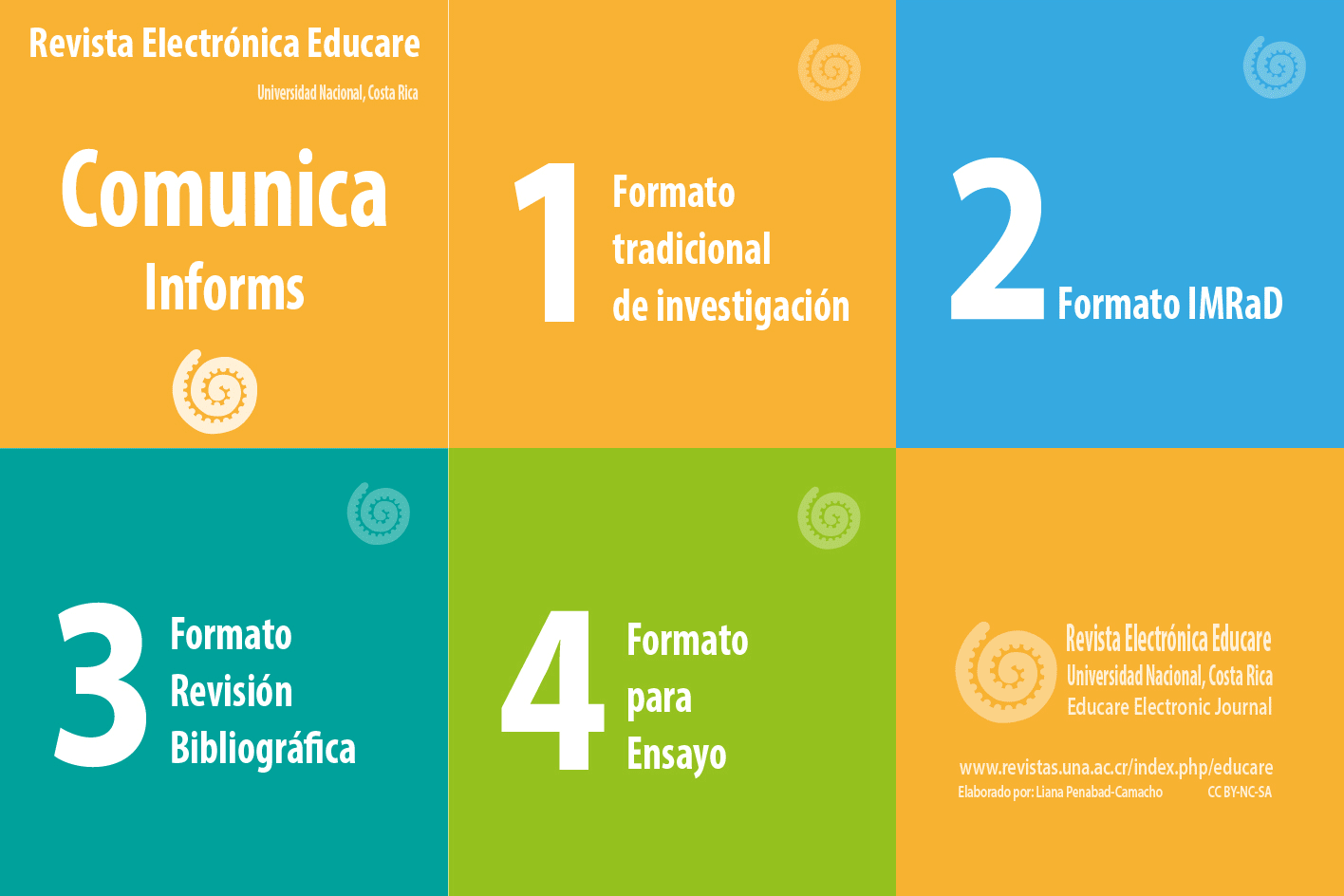
Tipos de artículos. Artículos originales de investigación (derivados de investigación en docencia, experiencias de acción social o didácticas) artículo de revisión bibliográfica y ensayos. Idioma. Recibe escritos en su idioma original español, inglés y portugués.
Acceso Abierto. Todos los artículos son de acceso abierto, para ampliar sobre este tema (ver Instrucciones a los autores/as).
La Revista tiene un Consejo Editorial conformado por miembros representantes de distintas universidades (Universidad de Costa Rica, Universidad Estatal a Distancia, Instituto Tecnológico de Costa Rica, Ministerio de Educación Pública y un Comité Científico Internacional con representantes de diferentes países. La Revista cuenta con un banco de árbitros(as), pares externos especialistas, para el proceso de arbitraje. El sistema de arbitraje: todos los trabajos serán sometidos al proceso de dictaminación con el sistema de revisión por pares externos, a doble ciego (double blind peer review ). Los artículos que se reciban a partir del 01 de julio de 2019 serán evaluados con revisión por pares externos con modalidad simple ciego (single blind peer review) que implica el anonimato de la persona evaluadora. La responsabildad del procesamiento del contenido y la continuidad de su publicación recae en el equipo editorial, en la figura de su Director(a) Editor(a) en Jefe.
Las personas que postulan para valoración un original deben llenar y firmar el documento titulado Carta de originalidad y cesión de derechos de autor y adecuar los escritos a los lineamientos que se estipulan en el documento Instrucciones a los autores, ambos en el menú Documentos y Guías . En el caso de artículos de varias personas autoras, todas deben firmar este documento. Licenciamiento y protección intelectual. La Revista y cada uno de los artículos y ensayos que se publican están licenciados por Creative Commons 3.0 Costa Rica (CC). Gratuidad (no hay APC). Los autores(as) no asumen ningún costo por el procesamiento de artículos, ni por el envío de artículos (no hay costo por el proceso editorial de sus artículos). Financiamiento. Educare se financia con recursos de la Universidad Nacional, Costa Rica. Esta Revista proporciona DOI a cada artículo. Formato de dictaminación. La revista para garantizar la transparecencia ofrece el Formato de dictaminación, que es es el formulario con los rubros que se califican cuando las personas postulan un artículo para arbitraje. El modelo de citación utilizado es APA.
Para conocer los índices y diversas bases de datos en las que se encuentra registrada la Revista, visite el menú superior Revista Indizada en.
Web Page: http://www.revistas.una.ac.cr/index.php/EDUCARE
Interoperabildad, OAI-PMH URL: http://www.revistas.una.ac.cr/index.php/educare/oai
ROR Id UNA, Costa Rica: https://ror.org/01t466c14
Contacto: MAU. Liana Penabad, directora
Correo electrónico: educare@una.ac.cr
Nuestra página: http://www.revistas.una.ac.cr/index.php/EDUCARE
Número actual
Vol. 30 Núm. 1 (2026): Revista Electrónica Educare (enero-abril) en construcción
Publicado:
2026-02-09






 Los artículos de la Revista Electrónica Educare se comparten con Licencia Creative Commons: